


Skills
UX/UI Design
Design Thinking
3D Visualization
Collaboration
Photography
Voice Work
Software/Hardware
Adobe Illustrator
Adobe Photoshop
Unity
Insta360 Pro
Oculus Rift
Leap Motion Sensor
Deliverables
Main Menu Design
Tutorial Graphics
3D Models
Voice Recording
Completed
May 2019
Experience JMU is a VR campus tour I helped design and build — a walk-up installation in the JMU Office of Admissions lobby where prospective students could put on an Oculus Rift headset and explore parts of campus the standard tour doesn't cover: a football game, a symphony performance, an interactive showcase of student work. From 2018 to 2023, it ran in active use, drawing hundreds of visitors per week.
Challenge
Experience JMU grew out of JMU's X-Labs, an interdisciplinary innovation space where design students, computer science students, IT engineers, and other majors worked side-by-side on real projects for real clients. The course had spent a semester exploring what the Unity engine could do in AR and VR — and this was the capstone: take everything learned and ship something real, for a real client, in a real space.
In 2018, that meant working on genuinely uncharted ground. The problems we had to solve had rarely been attempted before — and the most fundamental one was accessibility. Most visitors walking into that lobby had never worn a VR headset. We needed an experience anyone could pick up, instantly, without staff to guide them and without instructions to read first. Our solution was hand navigation: a Leap Motion sensor mounted to the Rift, and a tutorial that taught you how to move through the space as you entered it. No controller. No learning curve. Just your hands.

Approach
Three kiosks anchored the installation in the Office of Admissions lobby — each pairing a VR headset with a standing monitor and signage, so a crowd could watch and learn before stepping up themselves. I designed the main menu and the tutorial that taught first-time users to navigate comfortably, and recorded part of the voiceover that walked them through it.

Process
Working in groups, we used an Insta360 Pro spherical camera and visited different parts of campus to capture photo and videospheres at an 8k resolution.


A photosphere unrolled flat.
Rather than have the user interface with a set of controllers, to lower the barriers of entry for the first-time user, we found a way to allow them to navigate using only their hands. We attached a Leap Motion Controller to the front of the headset, which read the motions of the hands and translated them to virtual space.


I was given full creative control over the menu and the logo for the experience. I worked closely with computer science major team members to ensure it behaved according to my design.


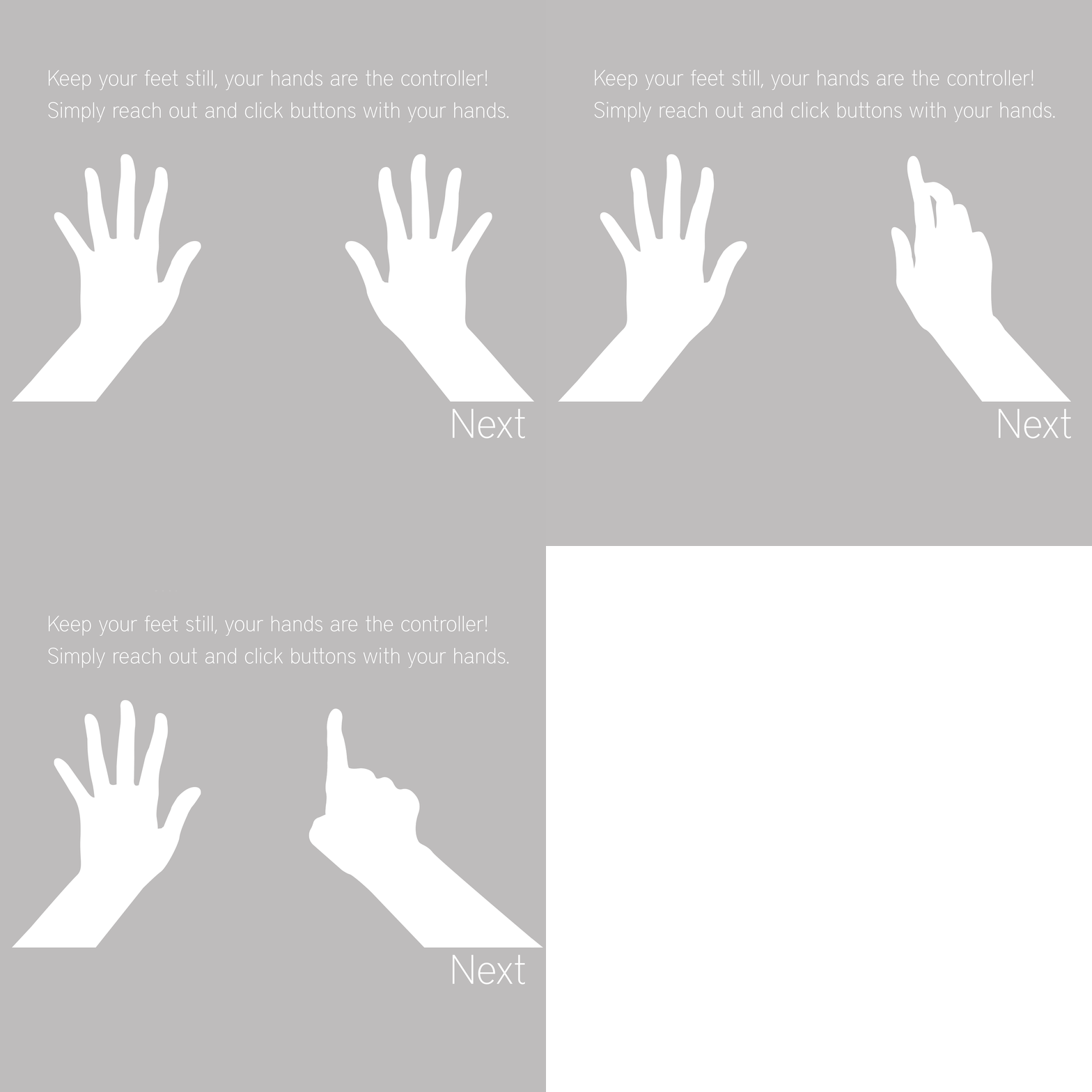
I also created graphics for the tutorial, using simple gifs to guide the user through the experience. When the need arose, I also volunteered to be the voice for the tutorial.


Final Installation


